
You built it. You launched it. You posted about it. And then… silence. Your product is sitting there, ready, perfect even, but nobody’s buying. The rent is still due, the stock is still full, and you’re wondering if you wasted your time. This is the gap most Kenyan entrepreneurs fall into, the space between having something and someone actually paying for it. How to get your first sale isn’t about building better, it’s about closing that gap. Let me show you what actually works when your product not selling isn’t about the product at all.
Why Your Product Launched But No Customers Showed Up
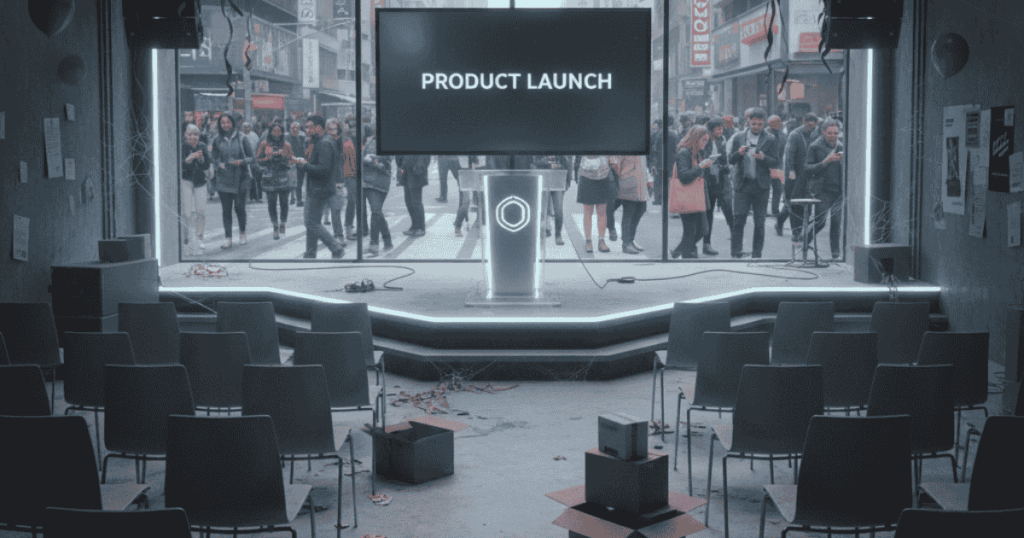
Here’s what nobody tells you: your product isn’t competing with bad products. It’s competing with noise. Every day your potential customer scrolls past 500 things someone’s trying to sell them. Instagram ads, WhatsApp status, that guy at the matatu stage, their cousin who just started “the same business.” Your product exists, but it exists in a void.
In Kenya this hits different because mpesa made buying easy but trust? Trust is HARD. Someone can send you money in two seconds but they won’t unless they believe you’re real, unless someone they know bought from you first, unless they’ve seen proof you’re not another scam. Social proof matters more here than anywhere else I’ve seen.
The visibility problem is this: you launched but nobody knows you exist. And I mean NOBODY. Not your target customer, not the people who would pay you today if they just knew you were there. You’re invisible. That’s not failure, that’s just math. Nobody wakes up knowing about your shop, your app, your service. You think launch means discovery but launch means day one of making people aware you’re alive.
Most startups here think product quality will do the marketing. Wrong. I’ve seen amazing products die in silence and average products blow up because someone understood this one thing: visibility is work, separate work from building the thing.
Before You Panic Talk and Learn How To Get Your First Sale

This is the part most of us skip. We build what we THINK people need, not what they’ll actually pay for. Market validation isn’t some theory from a business book, it’s conversations. Real ones. With real humans who have real money.
Here’s what you do, right now, today: WhatsApp broadcast to 20 people. Not “check out my new business,” that’s spam. Ask them straight: “Would you buy X for Y shillings? I need honest feedback.” Watch who responds. Watch what they actually say versus what you hoped they’d say.
Then go physical. If your customer is a small business owner, go to those shops. Industrial Area, River Road, wherever they actually are. If you’re selling to students, go to campus. If it’s mamas, go to the estate, the salon, the chama meeting. Online comes AFTER in-person, not before.
Ask the question that matters: “What would make you buy this TODAY?” Not “do you like it,” not “is this interesting,” but what would make them pull out mpesa right now. Then shut up and listen. They’ll tell you everything, the real price they’d pay, the thing you’re missing, the fear that’s stopping them.
Watch what they DO with their money, not what they SAY they’ll do. Ten people can tell you “nice idea” but if zero of them reach for their phone to pay, you don’t have validation. If two people buy immediately even when your packaging is rough and your pitch is shaky, you’re onto something real. Customer conversations are the difference between guessing and knowing.
The Kenyan customer is sophisticated. We know value. We also know when someone’s trying us. Talk to us straight, we’ll tell you straight back.
Stop Guessing, Start Testing Your Price To Get Your First sale
Pricing psychology here is specific. You cannot price like you saw in some American YouTube video. Their 500 dollars is not our 500 shillings. Their market is not our market.
Here’s what works: test three price points with real humans. Not in your head, not with your business partner, with actual potential customers. Show them the product at 2000, 3000, 4000. See where they flinch, see where they lean in.
The anchor technique works here: “Was 5k, now 2500” makes people move faster than just saying 2500. We understand value through comparison. Payment plans matter too. “250 bob weekly” sells WAY better than “1000 monthly” even though it’s more expensive. Break it down to something they already spend, “less than your weekly fare to town,” suddenly it’s not expensive, it’s replaceable.
Compare to what they already buy. If you’re selling skincare, don’t compare to international brands, compare to what they’re using now from the chemist. If you’re selling software, compare to the hours they’re wasting doing it manually, what’s that time worth?
The biggest mistake I see? Pricing too low because you’re scared. If you’re cheap you look fake. We’ve been scammed enough to know that if something’s too cheap, something’s wrong with it. Price for the value you’re creating, then prove that value fast through delivery, through results, through showing up when you said you would.
Your product not selling might not be the product, it might be you’re signaling “I don’t believe this is worth much” with your price.
How To Get Your First Sale Starting Tomorrow
Forget scale. Forget going viral. Forget the 10k followers dream. Get TEN people to buy. Just ten. Here’s exactly how.
Your network first. Text 50 people directly. Individual messages, not a broadcast. “I built this thing, I need honest feedback and first customers. Can I show you?” Half won’t respond. Twenty will say nice things. Five will actually look. Two might buy. That’s how it starts. Your first customer after launch is probably someone who knows you, trusts you, wants to support you. Let them.
Show up where they are. If you sell to small businesses, go to those businesses. Walk in. Introduce yourself. Show them the thing. If you sell to students, go to campus, set up a table, talk to humans. If you sell to mamas, go to the estate, the market, the places they’re already gathering. Online comes later. Right now you need launched product no customers to become launched product first customer, and that happens face to face.
Offer something stupid good. First 10 customers get lifetime discount. Free delivery forever. Personal setup. Something that makes it unreasonable to say no. You’re not trying to make profit on customer one through ten, you’re trying to make believers. These ten will tell other people, will give you testimonials, will show you what works. That’s worth more than the money.
Leverage free platforms first. Facebook groups where your customer actually hangs out. Not paid ads yet, you don’t know what works. Jiji. PigiaMe. Marketplace. WhatsApp status. Post everywhere that’s free. Be consistent. Most people post once, get discouraged, stop. Post daily. Show the product, show you using it, show other people using it, show behind the scenes, show the problem it solves. Repetition builds familiarity, familiarity builds trust.
Use local influencers smart. Not the big ones with 200k followers who charge 50k for a post. Find accounts with 2k to 5k ENGAGED followers in your exact niche. Offer them your product to review. Free. No money, just product. If it’s good they’ll post. If they post, their people trust them, some will buy.
Here’s the Kenya way that still works: referral incentive. “Bring a friend, get 200 bob mpesa instantly.” People here love immediate rewards, and we trust recommendations from people we know more than any ad.
Physical flyers still work. In estates, in matatus, in salons, in barbershops. Places people are waiting, places people are bored, places people actually read what’s in front of them.
Partner with existing shops. Give them 20% commission to sell your thing. They have customers already, you need access to customers. It’s math.
Use WhatsApp status religiously. I know it seems small but people HERE actually watch status. Every day. Multiple times. They’re not scrolling past, they’re watching the whole thing. Use it.
Once you get those first 10 customers, ask them hard questions: Why did you buy when others didn’t? What almost stopped you? What language would you use to tell a friend about this? Who else do you know who needs this? They’ll hand you your entire marketing strategy if you just ask.
Turn One Customer Into Ten More

That first sale is your blueprint for everything else. Don’t just celebrate and move on, study it. Interview that customer like your business depends on it, because it does.
Why did they buy when other people didn’t? Was it the price, the timing, something you said, the way you delivered, the problem it solved? What language did they use to describe the problem before they found you? Use that exact language in your marketing. Who do they know who has the same need? Ask for intros, ask for referrals, make it easy by offering them something for connecting you.
Get a testimonial. Video on your phone is fine. Written is fine. Social proof matters more than your marketing ever will. One real person saying “this works” beats 100 posts from you saying “buy this.”
Then repeat what worked. You don’t need a new strategy, you need the same strategy 10x. The mistake everyone makes is getting one sale then trying something completely different. No. Do the exact thing that got you customer one, do it 10 more times. Then 100 more times. Master one channel before you jump to the next.
Start Tomorrow To Get Your First Sale
Getting your first sale when nobody knows you exist isn’t about luck, it’s about proximity. Get close to real customers. Ask hard questions. Price with confidence not fear. Make it stupid easy to say yes. Show up consistently. Prove you’re real.
The Kenyan market rewards hustle but smart hustle. You can’t outspend Jumia on ads but you can out-care them on service, out-speed them on delivery, out-human them on connection. That’s your advantage. You’re small, you’re nimble, you can text a customer back in 5 minutes while they’re still trying to reach a call center.
Start tomorrow. Ten conversations. Ten real humans. One sale. That’s all you need to prove this works. Then you do it again.
What stopped YOU from getting your first customer? What’s the real fear, the real blocker? Drop it below, let’s talk about it straight. To learn more about how to egt better at getting sales, read more sales by reading more about our ecommerce masterclass
