
Your M-Pesa statement knows the truth even when your Instagram doesn’t. Look, I’m going to say what nobody else is saying because everyone’s too busy celebrating your “entrepreneur journey” .Your business isn’t making money because you’re chasing revenue instead of managing business cash flow, and there’s a massive difference between those two things that nobody taught you.
Check your M-Pesa right now. Not your best month, check the last six months. What do you see? 150k one month, 45k the next, 12k the month after that, then maybe 80k if God showed up. You’re calling that revenue but what about business cash flow? What about the actual money you can use, save, reinvest? That’s a different conversation isn’t it.
And I know this because I’ve been there, I’ve watched friends be there, I’ve consulted businesses stuck right there. The posting is consistent but the cash flow isn’t. The content is fire but rent is late. The engagement is up but you’re still asking your mom for help with bills because you never learned how to manage cash flow properly.
Why Understanding Business Cash Flow Changes Everything
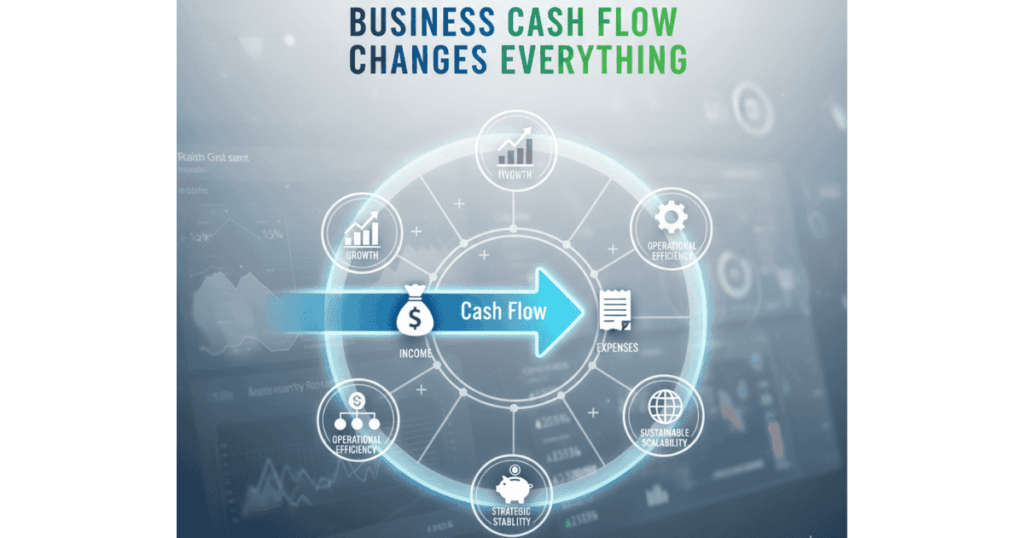
Here’s what they don’t tell you when you’re starting out – revenue is what comes in, business cash flow is what you actually have to work with after everything is paid. Most businesses don’t die because the idea was bad, they die because the owner couldn’t track cash flow, couldn’t predict when money was coming in, couldn’t plan for when it wasn’t.
You know what fake revenue looks like? It’s celebrating 200k in sales while 80k is stuck in pending payments, 60k went to stock, 30k to marketing that didn’t convert, 15k to M-Pesa and bank charges, and you’re left with 15k wondering why you’re exhausted. That’s not business cash flow, that’s chaos with impressive numbers attached.
The dropshipper posting 150k monthly revenue sounds successful until you break down the cash flow – supplier takes 90k, shipping is 25k, returns eat 15k, ads cost 10k, M-Pesa charges are 5k. They’re working with 5k actual profit while telling everyone they’re doing six figures. The revenue is real but the business cash flow tells a different story.
The consultant billing 80k monthly looks good on paper until you realize their cash flow management is a mess – 40k is stuck in “following up with accounts”, 20k is from a client who pays whenever they feel like it, so they’re actually living on 20k hoping the rest shows up eventually. That’s not managing business cash flow, that’s hoping money appears.
This is why you’re tired. This is why you’re hustling hard but staying broke. You’re chasing revenue numbers for the Instagram post but you never learned to improve cash flow for your actual life. And nobody’s teaching this because it’s not sexy, it’s not viral content, it’s just the truth about how money actually works in business.
The Revenue Vs Cash Flow Reality Check
Let’s talk about what you see online versus what business cash flow actually looks like.
Someone posts “500k month” and you feel behind. What they don’t post is how that affects their actual cash flow – 500k took six months to collect, half is still pending, 200k went to costs, and after everything their positive cash flow was maybe 80k. But 500k sounds better for the brand so that’s what goes on the grid.
The “fully booked” service provider who actually has terrible cash flow management because two clients paid, three said yes but haven’t paid deposits, and one is negotiating payment plans. Fully booked sounds like success, but their business cash flow is stressed.
The ecommerce store posting daily sales making it look like money is flowing. What you don’t see in their business cash flow statement is the stock sitting unsold that they bought on credit, the returns they had to refund, the marketing money that went out but didn’t bring sales back in. Revenue looks good, cash flow is struggling.
And listen I’m not hating on anybody’s journey, post your wins, celebrate your progress. But if you’re comparing your real business cash flow to someone else’s highlight reel revenue you’ll make yourself crazy. Worse, you’ll make business decisions based on what looks good instead of what your actual cash flow management says you can afford.
M-Pesa statements show business cash flow truth though. Bank statements don’t care about your aesthetic. Your landlord doesn’t take engagement as payment. At some point your real cash flow has to match the image or you’re just performing success while living in stress.
Here’s the truth about business cash flow – it’s boring, it’s not sexy for content, it’s tracking every shilling that comes in and goes out, it’s knowing your operating cash flow after everything is paid, it’s the difference between revenue and actual money you have. Most people don’t want to do that math because the math is humbling.
But the math is also what sets you free. Because once you know your real business cash flow you can fix your real problems instead of fixing imaginary ones.
Your M-Pesa Statement Shows Your Real Cash Flow
Stop reading for a second and let’s check your actual business cash flow situation.
Open your M-Pesa statement or bank statement, whatever you use for business. Look at the last six months. Add up every month’s income, divide by six. That’s your average monthly revenue. Not your best month, your average.
Now subtract your actual costs. And I mean everything – stock, supplies, software subscriptions, that VA you hired, transport, airtime, M-Pesa charges, packaging, marketing spend, loan repayments, rent if you have a physical space. Everything that affects your cash flow.
What’s left? That’s your actual business cash flow. That’s the real money you made that you can actually use.
Now ask yourself – can you survive on that cash flow? Not just survive, can you live, save, invest, grow on that number?
If the answer makes you uncomfortable, good. Uncomfortable is where change starts.
Most people avoid this exercise because they know their cash flow management has been a disaster. They’d rather believe they’re doing okay than face that they’re doing 200k in revenue but their positive cash flow is only 30k and they’re calling it entrepreneurship.
But here’s what happens when you face your real business cash flow – you stop lying to yourself about what’s working. You stop spending on things that don’t improve cash flow. You stop saying yes to clients who destroy your cash flow by paying late or paying little. You start making decisions like someone who actually wants healthy business cash flow not just impressive revenue numbers.
Track your business cash flow every single week. Not monthly, weekly. Know what came in, what went out, what’s pending, what’s late. It takes 15 minutes and it will transform your cash flow management completely.
Because the moment you know your real cash flow is the moment you can control your cash flow. And the moment you can control your business cash flow is the moment you actually have a business not just a hustle with a business name.
The Cash Flow Management System You’re Avoiding
You want to know what’s actually destroying your business cash flow? It’s not the market, it’s not competition, it’s not even lack of customers.
It’s that you don’t have a system to manage cash flow. You have vibes and prayers and hope.
Let me show you what I mean. The graphic designer who’s talented, whose work is beautiful, who gets compliments all the time. But their cash flow is inconsistent because they’re waiting for referrals, waiting for someone to tag them, waiting for the algorithm to work. They’re not reaching out, they’re not following up, they’re not asking for the sale. So they’re broke and talented with terrible cash flow management at the same time.
The online store owner who posts products daily, writes good captions, has decent engagement. But their cash flow suffers because they never DM people who like posts, never follow up with people who added to cart but didn’t buy, never ask customers to refer friends. They post and pray and wonder why their business cash flow is random instead of consistent.
The consultant who “doesn’t want to be pushy” so they send a quote and then disappear. Client doesn’t respond in two days, they assume it’s a no and move on. They don’t follow up because “if they wanted it they’d reach out”. So their cash flow stays small and polite and struggling because they never learned proper cash flow management.
This is what’s costing you money. Not your skills, not your product, not your service. Your unwillingness to build systems that actually improve your business cash flow consistently.
Here’s what real cash flow management looks like and it’s simpler than you think:
Consistent outreach that protects your cash flow. Every single day you reach out to potential clients. Not when you feel like it, every day. 10 DMs, 10 emails, 10 calls, whatever works for your business. You do it whether you’re motivated or not because your cash flow needs feeding whether you’re motivated or not.
Follow up to protect your business cash flow. You sent a quote? Follow up in 48 hours. They said they’ll think about it? Follow up in a week. They went quiet? Follow up again. Your cash flow depends on closing sales not on being polite and disappearing. People are busy, people forget, your follow up protects your cash flow.
Ask for money in ways that improve cash flow. Stop sending quotes with “let me know if you’re interested”. Start sending quotes with payment terms that protect your business cash flow – “50% deposit to start, balance on delivery” or “payment within 7 days to maintain our timeline”. The energy you bring to money conversations affects your cash flow directly.
Track what actually improves business cash flow. Not what feels good, what brings in money. That reel got 5k views? Great. Did it improve your cash flow? That networking event was fun? Cool. Did it bring clients who paid on time? That collaboration looked good on your page? Nice. Did it increase your positive cash flow? If it didn’t bring money into your business cash flow it’s not a business activity it’s content.
Get referrals to boost cash flow. Ask every customer who else they know who needs this. Every single one. After they’ve paid, after you’ve delivered, after they’re happy. Your next month’s cash flow is sitting in your current customers’ networks but you never asked.
This isn’t complicated, it’s just consistent. And consistency is what turns chaotic cash flow into predictable business cash flow that you can actually plan with.
Your business cash flow improves when you’re comfortable being uncomfortable. When you track cash flow not feelings. When you show up to manage your business cash flow even when engagement is low, even when you don’t feel like it, even when it’s been a slow week.
How To Track Business Cash Flow The Simple Way
Let’s get practical because theory doesn’t improve your actual cash flow.
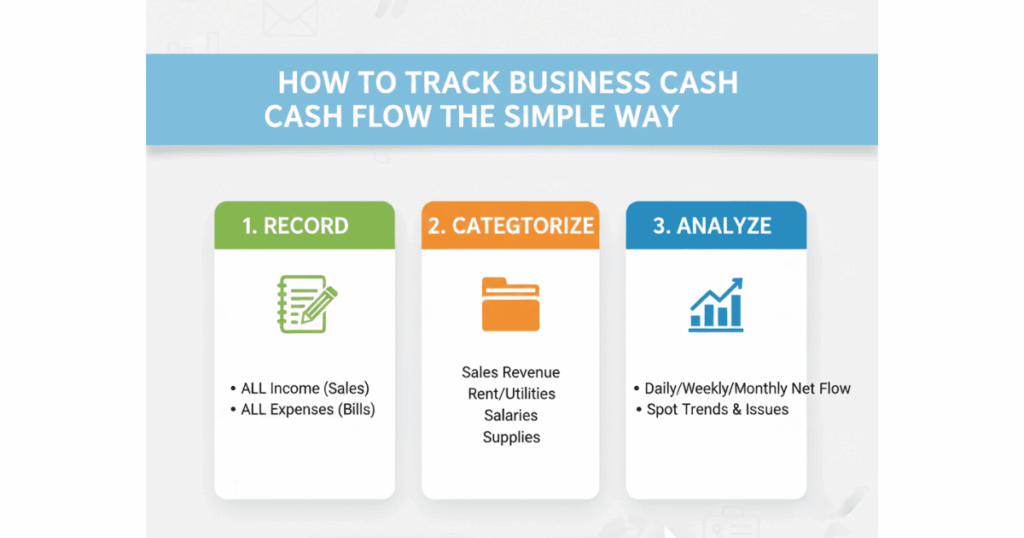
You need three numbers every single week for proper cash flow management. Revenue, expenses, cash flow. That’s it. Don’t overcomplicate your cash flow tracking.
Revenue – every shilling that came into the business this week. M-Pesa payments, bank transfers, cash, everything that affects your cash flow positively. Write it down.
Expenses – every shilling that went out for business this week. Stock, software, transport, airtime, materials, everything that reduces your cash flow. Write it down.
Cash Flow – revenue minus expenses. That’s your actual business cash flow this week, the real money you made that you can use.
Do this every Friday or Sunday for solid cash flow management, pick a day and stick to it. Takes 15 minutes maximum. You can use a notebook, Excel, those accounting apps, doesn’t matter. What matters is you track your business cash flow consistently.
Now here’s what you do with your cash flow data:
Look at your average weekly cash flow. Multiply by 4. That’s roughly your monthly business cash flow. Can you live on that? If no, you know exactly how much more positive cash flow you need. Now you can set real targets for improving cash flow not hopeful ones.
Look at your expenses that affect cash flow. Which ones actually bring in money? The social media ads that convert, keep them for healthy cash flow. The networking group that never brings clients, cut it to improve cash flow. The software you’re paying for but barely use, cancel it to protect your business cash flow. Every expense should justify itself in your cash flow management.
Look at your revenue sources and how they affect business cash flow. Which clients pay on time and improve your cash flow? Which ones you’re always chasing destroying your cash flow management? Which products sell consistently supporting positive cash flow? Which ones just take up space hurting your business cash flow? Double down on what improves cash flow, cut what doesn’t.
This is business cash flow management. It’s not sexy, it’s not fun, but it’s what keeps your cash flow healthy and your business alive.
And here’s the thing about tracking business cash flow – once you start you can’t stop because you’ll see patterns in your cash flow. You’ll see that your business cash flow improves when you do outreach consistently. You’ll see which months have weaker cash flow so you can plan for them. You’ll see where cash flow is leaking so you can plug the holes.
The business owners who make it aren’t smarter than you, they just manage business cash flow better. They know their cash flow is working because they track it. They know what to fix in their cash flow management because they measure it.
Business Cash Flow Solutions That Work Right Now

Alright here’s what you do Monday morning to improve your business cash flow. Not someday, not when you feel ready, Monday.
First thing for better cash flow management – set up a separate M-Pesa or bank account for business if you haven’t already. Personal money and business cash flow mixed together is how you stay confused about your real cash flow situation. Separate them today for proper cash flow tracking.
Second thing to improve cash flow – list every person or business that owes you money affecting your business cash flow. Every pending payment, every “I’ll pay you next week”, every invoice that’s overdue hurting your cash flow. Then follow up with all of them this week to improve your business cash flow. Not aggressive, just professional. “Hi, following up on payment for X, when can I expect it?” You’ll be surprised how much cash flow you have sitting in people’s promises.
Third thing for healthy cash flow – set a weekly cash flow target based on your real numbers. If you need 80k positive cash flow monthly, that’s 20k weekly. Break it down further for better cash flow management – if your average sale is 2k, you need 10 sales this week for good cash flow. Now you know exactly what business cash flow target to chase.
Fourth thing to strengthen business cash flow – build your daily sales activities that improve cash flow. What are the 3-5 things you can do every day that bring money into your business cash flow? For most businesses it’s: reach out to potential clients, follow up on quotes to protect cash flow, ask current customers for referrals, create content that sells and improves cash flow, deliver excellent service so people come back supporting your business cash flow. Pick your 3-5 and do them every single day for consistent positive cash flow.
Fifth thing for better cash flow – cut one expense this week that’s hurting your cash flow without bringing value. Just one. That subscription you’re not using draining cash flow, that marketing thing that’s not converting affecting your business cash flow negatively, that supplier who’s more expensive for the same quality. Cut it and redirect that money to something that actually improves your business cash flow.
Sixth thing for protected cash flow – set up a simple cash reserve to protect your business cash flow when things get tight. Even if it’s 5k monthly, start building a buffer for your cash flow management. Because business cash flow problems happen when unexpected expenses hit and you have nothing saved. Three months of expenses saved protects your cash flow completely, but start with one month, start with two weeks, start somewhere.
Here’s the mindset shift that changes your business cash flow completely – your business doesn’t exist to make you look successful online, it exists to generate positive cash flow that supports your life and grows over time. Everything you do should be measured against whether it improves your business cash flow or not.
Does this task improve business cash flow or save money? If no, why are you doing it?
Does this client pay on time supporting your cash flow management? If no, why are you bending over backwards for them?
Does this expense increase your cash flow or decrease costs? If no, why is it still hurting your business cash flow?
These questions will save you so much stress in your cash flow management. Because most of what we do in business is performance, we’re performing busy, performing growth, performing success. Meanwhile our actual business cash flow is starving because we’re feeding the image instead of feeding the cash flow.
And look, I know it’s hard out here. I know the Kenya economy is tough, I know customers are price sensitive, I know competition is everywhere, I know some months your cash flow will just be slow no matter what you do. I’m not pretending any of this is easy.
But improving business cash flow is possible. Small businesses in Kenya are managing cash flow properly right now, not huge money, not quit-your-job-in-three-months money, but real, consistent, growing cash flow that actually works. The difference between them and the businesses with terrible cash flow? They manage business cash flow like their life depends on it because it does.
They track their cash flow like crazy, they follow up on everything affecting their business cash flow, they cut what hurts cash flow, they double down on what improves business cash flow. They’re not more talented, they’re more disciplined about cash flow management. They’re not luckier, they’re more consistent with protecting their business cash flow. They’re not special, they just decided to face their cash flow numbers and fix what their cash flow management showed them.
The Choice Your Cash Flow Statement Will Show
Six months from now your business cash flow will tell a story.
Either it shows the same chaos – good months, terrible months, unpredictable cash flow, stressed-out you with terrible cash flow management. Or it shows something different – consistent positive cash flow, growing business cash flow, money you can actually plan with, breathing room you haven’t had because your cash flow management finally works.
The difference between those two cash flow stories is what you do Monday. And Tuesday. And every day after that to improve your business cash flow.
Nobody’s coming to save your business cash flow. Not a viral post, not a big client, not a lucky break. Those things are nice when they happen but you can’t build stable cash flow on luck. You build business cash flow on systems, on tracking your cash flow, on consistent action that protects your cash flow even when it’s uncomfortable.
So here’s what I need you to do for your business cash flow – stop performing success and start building real positive cash flow. Stop waiting for motivation and start following your cash flow management system. Stop avoiding your cash flow numbers and start using them to make better decisions that improve your business cash flow.
Your business can work. Your cash flow can be healthy. But it will only work when you treat business cash flow management like it’s the most important thing because it is. Everything else is secondary to cash flow coming in consistently and you keeping more of it than you spend.
You’ve got the talent, you’ve got the work ethic, you’ve probably got a better product or service than half the people making money with good cash flow right now. What you need is the discipline to manage your business cash flow like someone who actually wants to keep their business alive.
Check your M-Pesa statement. Look at your real business cash flow. Make the uncomfortable decisions that improve cash flow. Build the boring systems for cash flow management. Follow up on the money to protect your cash flow. Track your business cash flow every single week.
That’s it. That’s how you master business cash flow.
Not complicated. Just consistent.
Now go fix your cash flow. now its time to find out how to do this in Kenya and start making money with your own business today