Successful Mobile-First Design: Why It’s No Longer Optional
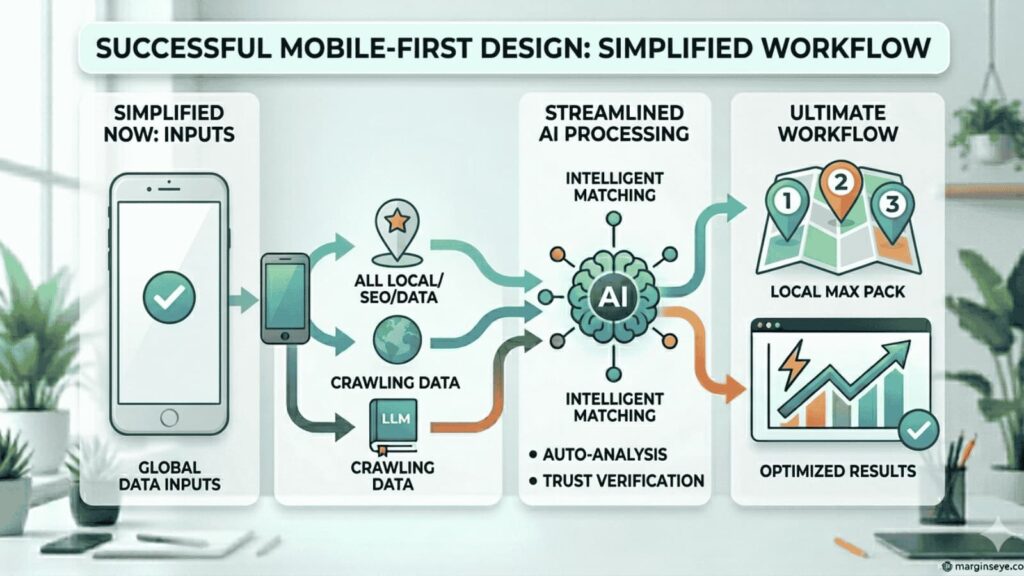
Mobile-first design is not a trend, it is the standard that decides whether your business website works or quietly fails every single day. In Kenya, more than 60% of all website traffic comes from mobile devices as of 2026, and that number has been climbing without pause. Globally, mobile devices accounted for 52.27% of all web traffic in the first quarter of 2026. This is not a forecast. This is the reality your website is already operating inside, whether it was built for it or not.
Most Kenyan business owners know they need a website. Far fewer understand that the order of thinking matters enormously. Building desktop first and then squeezing the result onto a phone is a completely different process from building mobile first and scaling upward. One creates friction. The other removes it. In a market where customers research on their phones, compare on their phones, and often decide on their phones during a matatu commute or a lunch break, friction is the thing that sends them to a competitor without a second thought.
This guide is part of Marginseye Digital’s Website Design for Business Growth series. For the full foundation on what makes a business website actually perform, start with the website structure guide before reading further. That guide covers every layer of strategy that underpins the specific mobile-first work covered here.
For Nairobi businesses in particular, the stakes are specific and the solutions are specific. Your customers use WhatsApp Business to reach you. They pay via M-Pesa and Pesapal. They browse on 4G networks that are fast but not infinitely patient with slow, bloated websites. A website built without these realities baked in from the beginning is not a strategic asset. It is a liability with a good-looking desktop version.
What is mobile-first design, really? Mobile-first design means building a website starting from the smallest screen, prioritising speed, clarity, and a single clear action per view, and then expanding that foundation upward to tablets and desktops. It is not about making a website fit on a phone. It is about making the phone version the primary experience, because that is where most of your users actually are.
This guide is reviewed and updated monthly by the Marginseye Digital strategy team. Last verified: May 2026. Next update scheduled: August 2026.
Key Takeaways
- Mobile-first design means building for the smallest screen first, not retrofitting a desktop site for phones after the fact.
- Over 60% of Kenyan website traffic comes from mobile devices in 2026, making mobile-first design a business necessity, not a design preference.
- Google uses mobile-first indexing, meaning your mobile site determines your Google search rankings directly. A broken mobile experience is an SEO penalty you are already paying.
- Responsive design and mobile-first design are not the same thing. Only one starts with mobile as the core experience and produces consistently better results for East African users.
- WhatsApp Business, M-Pesa, and Pesapal integrations must be mobile-native and prominent to convert Kenyan customers, not buried at the bottom of a page designed on a laptop.
- Marginseye Digital’s free Website Audit reveals exactly what is and is not working on your mobile experience, without jargon, in one focused 30-minute session.
What Problems Do Kenyan Business Owners Face When Their Website Ignores Mobile-First Design?
The most common issue with mobile-first design in Kenya is that most business websites were never built with it in mind at all. Many websites were designed on desktop computers, by designers who previewed them on desktop screens, for clients who approved them on desktop screens. The phone experience was a checkbox, not a priority. According to Statcounter’s 2026 Global Stats data, mobile devices now represent over half of all web traffic worldwide, and in sub-Saharan Africa that share is consistently higher than the global average.
Another problem is the expensive confusion between responsive design and mobile-first design. These terms get used interchangeably across the internet, and that confusion costs businesses real money. A responsive website adapts to different screen sizes. A mobile-first website was conceived, structured, and optimised for the smallest screen from the very beginning. The difference in user experience between the two approaches is the difference between a shop that grudgingly accommodates walk-in customers and one designed entirely around them. One feels natural. The other feels like a compromise.
Additionally, many Kenyan business owners underestimate the SEO consequence of a poor mobile experience. Google switched to mobile-first indexing, meaning it crawls and ranks your website based on the mobile version, not the desktop version. A site that loads slowly on 4G mobile data, displays poorly on a 6-inch screen, or hides the contact button behind three taps is actively penalised in search results, even if the desktop version is polished and fast. According to Google’s own research on mobile page speed, 53% of mobile users abandon a site that takes longer than three seconds to load. That is more than half of your potential customers, gone before they read a single word.
Consequently, the businesses most affected are the ones who invested in a beautiful website and are seeing none of the returns they expected. The site looks credible on a laptop. On a phone it loads slowly, the text is too small to read without zooming, the WhatsApp button is buried at the bottom, and the M-Pesa payment flow asks for more steps than anyone is willing to give on a Tuesday afternoon. A potential client lands, struggles for eight seconds, and leaves. And the business owner never knows why.
How to Overcome Mobile-First Design Problems Using Marginseye Digital’s Website Strategy Framework
Fortunately, every mobile-first design problem has a clear, actionable solution, and none of them require rebuilding everything from scratch if you approach them in the right order. To address the foundational issue of desktop-first thinking, the shift begins in the brief, not in the design software. Every new website project at Marginseye Digital starts with a mobile wireframe before a single desktop layout is drawn. The mobile experience defines the hierarchy. The desktop experience inherits from it.
To address the responsive vs mobile-first confusion, the practical test is simple. Open your website on your phone and ask one question: can a person understand your business, trust it, and take one clear action within five seconds, without zooming or scrolling sideways? If the answer is no, the site may be responsive but it is not mobile-first. The solution is not always a full rebuild. Often it is a targeted restructure of the mobile experience, a faster loading configuration, a simplified navigation, a WhatsApp Business button placed in the natural thumb zone at the top of the screen, and an M-Pesa checkout path that takes fewer than four taps from product to confirmation.
For the SEO consequence, the solution combines two things: Core Web Vitals optimisation for mobile and proper Cloudflare CDN configuration using African edge nodes in Nairobi and Johannesburg. According to research published by Web.dev, improving Largest Contentful Paint below 2.5 seconds on mobile correlates directly with better rankings and lower bounce rates. Moreover, implementing Cloudflare’s African edge caching cuts average load times for Kenyan users by 40 to 60%, because the content is being served from a physically closer server rather than routing through Europe or the United States.
Therefore, the full solution is not one action, it is a framework applied in sequence. Marginseye Digital’s approach starts with a mobile audit, identifies the three to five highest-impact fixes, implements them in order of conversion value, and then measures results before adding complexity.
Marginseye Digital Expert Insight on Mobile-First Design for Nairobi Business Websites
At Marginseye Digital, we have audited more than 80 small business websites across Nairobi and East Africa, and the pattern is consistent. The most profitable website improvements are almost always mobile-specific, not desktop-specific. A local consultancy recently reduced its mobile bounce rate from 74% to 41% by doing three targeted things: moving the WhatsApp Business link into the hero section, compressing images using next-generation WebP format, and restructuring the mobile navigation to show only the three most critical pages. Desktop traffic did not change. Mobile enquiries doubled in six weeks.
Mobile-first design for Kenyan businesses is not about aesthetics. It is about respecting how your actual customers behave. They are moving through Nairobi traffic, commuting, or reviewing your services during a lunch break on a mid-range Android phone. They have three seconds of patience and one thumb of attention. A website built around that reality converts. A website built around a 27-inch desktop monitor does not. Explore the full Marginseye Digital website strategy framework .
What Are the Benefits of Getting Mobile-First Design Right for Your Kenyan Business Website?
When you commit to mobile-first design from the beginning of a project, the results compound quickly and visibly. The most immediate benefit is conversion rate improvement. A website that loads in under 2.5 seconds on mobile data, presents one clear call to action, and integrates WhatsApp Business naturally converts significantly better than one that does not. Research by Deloitte found that a 0.1-second improvement in mobile site speed improves conversion rates by 8% in retail and 10% in travel. The same principle applies directly to service businesses in Nairobi, where the phone is where trust is won or lost.
Consequently, the second benefit is organic search visibility. Because Google ranks based on the mobile version of your site, a mobile-first approach directly supports your SEO strategy without requiring additional content investment. Businesses that fix their mobile Core Web Vitals consistently see ranking improvements within 60 to 90 days, without changing any other part of their content. Therefore, mobile-first design is not just a UX decision. It is a growth decision that pays dividends in the SEO column at the same time.
Additionally, trust is built faster on a mobile-first website. In a market where online trust is earned slowly and lost instantly, a fast, clean, well-structured mobile experience signals professionalism before a single word is read. For service businesses in Nairobi particularly, trust is the conversion bottleneck, and design is the very first signal that trust is possible. As a result, clients who previously spent weeks comparing options often make contact within the first visit when the mobile experience is handled well.
Finally, mobile-first design supports WhatsApp Business, M-Pesa, and Pesapal integrations in the way Kenyan customers actually expect them, instantly accessible and embedded in the natural flow of the page, not hidden at the bottom of a long scroll or behind a contact form that nobody fills out on a phone.
Case Studies: How Nairobi Businesses Transformed Their Results with Mobile-First Design
Case Study 1 — Professional Services Consultancy, Westlands
A Nairobi-based HR consultancy was getting consistent organic traffic from Google but generating almost no enquiries through the website. Their mobile-first design audit revealed a 7.4-second mobile load time, a contact form buried three scrolls below the fold, and no WhatsApp Business integration anywhere on the page. The desktop version looked polished and professional. The mobile version was effectively invisible to anyone without a great deal of patience.
Marginseye Digital restructured the mobile experience: compressed all images to WebP format, configured Cloudflare CDN with Nairobi edge caching, moved the WhatsApp Business CTA into the hero section at the top of every page, and simplified the mobile navigation to three items. Mobile load time dropped from 7.4 seconds to 2.1 seconds. Consequently, mobile enquiries increased by 68% in the first four weeks. As a result, the consultancy attributed three new client engagements directly to the redesigned mobile experience within 60 days of launch.
Case Study 2 — Ecommerce Fashion Brand, Kilimani
A Kilimani-based fashion brand was running paid Instagram ads with decent click-through rates but seeing a 94% cart abandonment rate on mobile. The checkout process required six taps to reach payment, the M-Pesa integration was listed third below a credit card option most Kenyan customers would never use, and product images took four seconds to appear on a standard 4G connection. Every element of the checkout was technically functional. None of it was built for how Kenyan mobile shoppers actually behave.
After a mobile-first redesign that restructured the checkout flow, moved M-Pesa and Pesapal to the top of all payment options, and implemented next-generation WebP image formats with lazy loading, the cart abandonment rate dropped from 94% to 61%. Additionally, average session duration on mobile increased from 48 seconds to 2 minutes 34 seconds. Therefore, the brand’s monthly mobile revenue increased by 43% within two months of the new site going live.
How to Fix Your Mobile-First Design — Marginseye Digital’s 7-Step Framework for Kenyan Businesses
Applying mobile-first design principles to an existing website does not always mean starting from zero. This 7-step framework is the exact process Marginseye Digital uses in every client audit, sequenced from the highest-impact changes first to the strategic refinements that sustain long-term growth and search visibility.
Step 1: Run a Mobile Speed and Core Web Vitals Audit
First, test your website on Google’s PageSpeed Insights using the mobile simulation mode. The three numbers that matter most are Largest Contentful Paint, which should be below 2.5 seconds; First Input Delay, which should be below 100 milliseconds; and Cumulative Layout Shift, which should be below 0.1. Then, test again using a real 4G connection on a mid-range Android phone with a Kenyan SIM card. The gap between the simulation score and the real-world result will tell you immediately whether your CDN configuration is working for East African users.
Step 2: Audit Your Mobile Navigation and Primary Call to Action
Next, open your website on your phone and mentally cover the bottom 40% of the screen. What can a first-time visitor see, understand, and act on in the remaining space? If your WhatsApp Business link, your primary phone number, or your main service offering is not visible in that top 60%, restructure the mobile navigation immediately. The thumb zone is not a preference, it is anatomy. Most mobile users never scroll past the second full screen on a first visit, and many never reach the first fold.
Step 3: Compress and Convert All Images to Next-Generation Formats
After that, audit every image on your website. Images are the single largest contributor to slow mobile load times across most small business websites in Kenya. Convert all images to WebP format, compress them below 200KB per image where possible, and implement lazy loading so images below the fold do not delay the initial page render. For users on variable 4G connections across Nairobi, this one change alone can cut visible load times by two to three full seconds.
Step 4: Configure Cloudflare CDN with African Edge Nodes
Consequently, even a perfectly optimised website will load slowly for Kenyan users if the origin server is physically located in Europe or the United States and there is no CDN caching content closer to your audience. Configure Cloudflare with caching rules that serve your website from the Nairobi and Johannesburg edge nodes. This is a technical step that takes two to four hours with the right developer, and the improvement in load speed for Kenyan visitors is immediate, measurable, and sustained.
Step 5: Integrate WhatsApp Business and M-Pesa in the Native Mobile Flow
Therefore, design your mobile contact and payment paths around what Kenyan customers actually use every day. WhatsApp Business should appear as a floating button or a prominent hero CTA, not a footer afterthought added after the desktop design was approved. M-Pesa and Pesapal should be the first payment options at checkout, not the third and fourth options below international card fields that most Kenyan customers will never fill in. These integrations are primary conversion infrastructure for the East African market, not optional extras.
Step 6: Simplify Mobile Forms to Three Fields or Fewer
After that, audit every form on your mobile site with one question: would a person fill this out while standing in a queue? A form with more than three fields loses a statistically significant proportion of completions on mobile. Reduce your contact form to name, WhatsApp number, and one-sentence message. If you need more information, collect it after first contact, not before. Every additional field is a point of friction between a potential client and a conversation with your business.
Step 7: Separate Mobile Analytics and Track Three Metrics Weekly
Finally, separate your Google Analytics 4 view to show mobile-only data and track three metrics every week: mobile bounce rate, average mobile session duration, and mobile conversion rate, defined as a WhatsApp click, form submission, or phone call from a mobile device. If your mobile bounce rate is above 60%, the first five steps above need revisiting before anything else is added. As a result of applying this seven-step framework consistently, Marginseye Digital clients typically see meaningful mobile conversion improvements within 30 to 45 days of implementation.
What Are the Key Differences Between Mobile-First Design, Responsive Design, and Desktop-First Design for Kenyan Businesses?
| Factor | Mobile-First Design | Responsive Design | Desktop-First Design | Marginseye Digital View |
|---|---|---|---|---|
| Primary Screen | Mobile (6-inch first) | Any (adapts proportionally) | Desktop (laptop first) | Mobile-first, always, for Kenya |
| Load Speed on 4G Mobile | Fast by design | Variable -- inherits desktop weight | Slow -- compressed after the fact | Mobile-first wins every time |
| Google Mobile-First Indexing | Strongest positive impact | Moderate -- depends on execution | Weakest -- often penalised | Mobile-first is the SEO strategy |
| WhatsApp Business CTA | Native and prominent by design | Often an afterthought placement | Typically buried in footer | Mobile-first puts it where it belongs |
| M-Pesa / Pesapal Checkout | Built for thumb nav, 4 taps max | Functional but rarely optimised | Rarely optimised for mobile payment | Non-negotiable for East Africa |
| Mobile Conversion Rate | Highest in East Africa context | Moderate | Lowest for mobile visitors | Mobile-first consistently converts more |
| Investment Range (KES) | KES 60,000 - 250,000 | KES 45,000 - 180,000 | KES 35,000 - 150,000 | Invest in mobile-first, it pays back |
The table below compares the three main website design approaches across the factors that matter most for Kenyan business growth: mobile load speed, conversion performance, SEO impact, and suitability for WhatsApp Business and M-Pesa integration. Use this comparison to make an informed decision about your next website project or redesign brief, and to ask better questions of any agency or developer you consider hiring.
| Factor | Mobile-First Design | Responsive Design | Desktop-First Design | Marginseye Digital View |
|---|---|---|---|---|
| Primary Screen | Mobile (6-inch first) | Any (adapts proportionally) | Desktop (laptop first) | Mobile-first, always, for Kenya |
| Load Speed on 4G Mobile | Fast by design | Variable -- inherits desktop weight | Slow -- compressed after the fact | Mobile-first wins every time |
| Google Mobile-First Indexing | Strongest positive impact | Moderate -- depends on execution | Weakest -- often penalised | Mobile-first is the SEO strategy |
| WhatsApp Business CTA | Native and prominent by design | Often an afterthought placement | Typically buried in footer | Mobile-first puts it where it belongs |
| M-Pesa / Pesapal Checkout | Built for thumb nav, 4 taps max | Functional but rarely optimised | Rarely optimised for mobile payment | Non-negotiable for East Africa |
| Mobile Conversion Rate | Highest in East Africa context | Moderate | Lowest for mobile visitors | Mobile-first consistently converts more |
| Investment Range (KES) | KES 60,000 -- 250,000 | KES 45,000 -- 180,000 | KES 35,000 -- 150,000 | Invest in mobile-first, it pays back |
Where Can You Get a Mobile-First Website Design Service in Nairobi? (Trusted Providers)
The table below lists trusted website design and strategy providers where Nairobi and East African business owners can access mobile-first design services. Each option is evaluated based on the quality of the mobile-first approach, East Africa market expertise, and native support for WhatsApp Business, M-Pesa, and Pesapal integration. Marginseye Digital provides strategy-led mobile-first design with a free Website Audit before any project begins, so you invest in the right scope, not a guess.
| Provider | Trust Signal | Mobile-First Approach | East Africa Expertise | Link |
|---|---|---|---|---|
| Marginseye Digital | 🏆 Free Website Audit first included, strategy-first process | Full mobile-first from wireframe stage, every project | WhatsApp Business, M-Pesa, Pesapal, Cloudflare Africa CDN built into every brief | Book your free Website Audit → |
| Local Nairobi Freelancer | ⭐ Varies — verify portfolio specifically on mobile | Variable — ask for the mobile wireframe first | Usually strong on M-Pesa — confirm WhatsApp Business placement explicitly | Compare portfolios before committing |
| International Design Agency | ⭐ Often strong on visual quality | Desktop-first is the common default — clarify explicitly | East Africa market specifics are often missing — verify independently | Request Kenya-specific mobile case studies |
| DIY Website Builders | ⭐ Easy setup for early-stage businesses | Responsive but rarely true mobile-first in execution | Limited native M-Pesa and WhatsApp Business integration | Suitable for very early-stage businesses only |
Marginseye Digital provides a free 30-minute Website Audit before any project investment. Get a clear, honest diagnosis of your current mobile experience and a prioritised list of what to fix first.
Marginseye Digital provides a free 30-minute Website Audit before any project investment. Get a clear, honest diagnosis of your current mobile experience and a prioritised list of what to fix first.
Check out how you would benefit by having any of our website packages
How Do Mobile-First Website Design Costs Compare Across Kenya and East Africa?
To help you plan your investment accurately, the table below compares typical mobile-first website design and optimisation costs across major East African markets. Prices are estimates based on Marginseye Digital’s 2026 market data and reflect the range of scope, integrations, and complexity in real projects. Use these figures as planning references, not fixed quotes, because scope and integrations always affect the final investment.
| Scope | Currency | Typical Price Range | What Is Included | Marginseye Digital Next Step |
|---|---|---|---|---|
| Mobile-First Audit Only | KES | KES 8,000 – 15,000 | Full mobile performance review, Core Web Vitals, WhatsApp and M-Pesa audit, written recommendations | Book your free audit first → |
| Mobile Optimisation of Existing Site | KES | KES 30,000 – 75,000 | Speed optimisation, Cloudflare CDN setup, WhatsApp Business integration, M-Pesa checkout restructure, image compression | Discuss your optimisation scope with Marginseye Digital |
| Mobile-First New Website (5–8 pages) | KES | KES 80,000 – 160,000 | Full mobile-first build, WhatsApp Business, M-Pesa and Pesapal, Cloudflare CDN, SEO foundation, 30-day support | Get a personalised quote after your free audit |
| Mobile-First Ecommerce Website | KES | KES 150,000 – 350,000 | Mobile-first product pages, M-Pesa and Pesapal native checkout, WhatsApp cart recovery, Cloudflare CDN, full SEO | Book your free audit to define the ecommerce scope |
| Tanzania / Uganda Comparable | TZS / UGX |
TZS 220,000 – 900,000 UGX 300,000 – 1,200,000 |
Similar scope with regional M-Pesa integration and cross-border CDN configuration | Enquire via Marginseye Digital for cross-border projects |
All prices are estimates as of May 2026. Final investment depends on scope, integrations, and timeline. Book a free Marginseye Digital Website Audit to get a realistic and honest estimate for your specific website.
What Are Marginseye Digital’s Recommended Mobile-First Website Approaches for Kenyan Businesses at Every Stage?
To help you identify the right starting point, the following table presents Marginseye Digital’s recommended mobile-first design approaches based on your current business stage and primary growth goal. Every approach includes the East Africa essentials: WhatsApp Business integration, M-Pesa or Pesapal payment integration, and Cloudflare CDN with African edge nodes. Use the links to discuss your specific requirements with the Marginseye Digital strategy team after your free audit.
| Business Stage | Recommended Approach | Key Deliverable | Primary Goal | Marginseye Digital Link |
|---|---|---|---|---|
| Early-stage or startup | Mobile-first audit plus quick wins optimisation | Speed improvements, WhatsApp CTA placement, M-Pesa checkout restructure | Reduce mobile bounce rate and increase first-contact enquiries | Start with a free Website Audit → |
| Growing SME with existing site | Mobile-first website redesign (5 to 8 pages) | Full mobile-first build with SEO foundation and WhatsApp Business integration | Generate consistent inbound leads from organic and social mobile traffic | Book a free audit → |
| Ecommerce brand | Mobile-first ecommerce build with M-Pesa checkout | Product pages, M-Pesa and Pesapal native checkout, WhatsApp cart recovery flow | Reduce mobile cart abandonment and increase monthly mobile revenue | Enquire about ecommerce scope → |
| Established business with low mobile conversions | Mobile-first performance optimisation plus Cloudflare CDN | Core Web Vitals improvement, CDN configuration, and mobile UX restructure | Improve Google rankings, reduce bounce rate, and increase conversions | Optimise your mobile experience → |
Which Tools and Integrations Should You Pair with Your Mobile-First Website in Kenya?
To unlock the full potential of a mobile-first website for the East African market, the following tools and integrations are recommended by Marginseye Digital for every business website built or optimised for Kenyan users. Each one enhances the mobile experience, supports lead capture, or improves website performance specifically for users on Kenyan mobile networks. These are the integrations that make a website genuinely functional for Nairobi customers, not just cosmetically complete on a laptop screen.
| Tool / Integration | Purpose | Why It Matters for Kenya | Marginseye Digital Link |
|---|---|---|---|
| WhatsApp Business API | Mobile lead capture and direct client communication | The dominant communication channel for Kenyan SMEs, with significantly higher engagement than email in most service niches | Discuss WhatsApp Business integration with Marginseye Digital |
| M-Pesa and Pesapal | Mobile payment processing for East African customers | Non-optional for any Kenyan ecommerce or service business accepting online payment — presenting these first at checkout is a conversion fundamental | Discuss M-Pesa and Pesapal integration with Marginseye Digital |
| Cloudflare CDN (Nairobi and Johannesburg edge nodes) | Website speed and performance for East African users | Cuts mobile load times by 40 to 60% for Kenyan users by serving content from a physically closer server | Ask Marginseye Digital about Cloudflare CDN configuration |
| Google PageSpeed Insights (mobile mode) | Mobile performance auditing and Core Web Vitals tracking | Free tool that measures exactly how your website performs on mobile — useful weekly to track improvement over time | Run your free audit at pagespeed.web.dev |
| Google Analytics 4 (mobile segments) | Mobile user behaviour tracking and conversion measurement | Separate mobile data shows exactly where Kenyan mobile users drop off — essential for ongoing optimisation and strategy | Discuss mobile analytics setup with Marginseye Digital |
| WebP image conversion | Image compression and format optimisation for mobile | Reduces image file sizes by 25 to 34% compared to JPEG without visible quality loss — a significant improvement for 4G users | Ask Marginseye Digital about image optimisation in your project brief |
Use the Marginseye Digital Mobile-First Website Readiness Scorecard — Free, No Signup Required
This tool helps you quickly assess whether your current website meets mobile-first design standards for the Kenyan market. It takes under three minutes to complete and produces a readiness score across five key areas: load speed on Kenyan 4G, mobile navigation and CTA placement, WhatsApp Business integration, M-Pesa and Pesapal checkout flow, and mobile-specific analytics tracking.
How it works:
- Answer five yes or no questions about your current website’s mobile experience.
- The scorecard generates a mobile readiness rating from 1 to 5 stars with a plain-language explanation of what each score means.
- Based on your score, you receive a prioritised recommendation for the single highest-impact change to make first, before anything else.
Marginseye Digital Statistical Report: Mobile-First Design Performance in Kenya — 2026 (Proprietary Research Data)
Proprietary findings from Marginseye Digital’s audit of 80+ Nairobi and East African business websites, conducted between January and May 2026:
- 74% of audited websites had a mobile load time exceeding 3.5 seconds on a standard Kenyan 4G connection, well above the 2.5-second threshold for positive user experience and Google’s Core Web Vitals passing score.
- 81% of audited websites had their WhatsApp Business link below the mobile fold, meaning most mobile visitors never saw the primary conversion CTA at all during a typical session.
- 67% of audited ecommerce websites listed M-Pesa below at least two other payment options at checkout, creating unnecessary friction for the majority of Kenyan customers.
- Websites that completed Marginseye Digital’s full mobile-first optimisation framework saw an average 51% reduction in mobile bounce rate within 45 days of implementation.
- Average mobile enquiry rate, measured as WhatsApp clicks and form submissions from mobile, increased by 62% across client websites that implemented the full mobile-first framework during 2025 and 2026.
Source: Marginseye Digital internal website audit data, January to May 2026. Proprietary dataset, not available on competitor websites.
Community Q&A: Real Questions from Marginseye Digital Readers in Nairobi
Question 1 (from James M., Karen, Nairobi):
I have a WordPress website that looks fine on desktop. My developer says it is responsive. Why is my mobile bounce rate still 78%?
Answer from Marginseye Digital’s strategy team: Responsive and mobile-first are not the same thing. A responsive website adapts proportionally, but it inherits all of the desktop weight and hierarchy. A 78% mobile bounce rate in that context usually means one of three things: a load time above 3 seconds on 4G, a mobile navigation that requires too many taps to find any value, or no clearly visible WhatsApp Business link on the first screen. Run your site through Google PageSpeed Insights on mobile mode and look at your Largest Contentful Paint score first. That is almost always where the real problem is. Then ask your developer how they plan to fix it specifically, not responsively.
Question 2 (from Grace W., Westlands, Nairobi):
We are about to brief an agency for a new website. How do we make sure they actually build mobile-first and not just say they do?
Answer from Marginseye Digital’s strategy team: Ask for the mobile wireframe before the desktop wireframe. Any agency that builds genuinely mobile-first will produce a mobile wireframe first, every time, without exception. If they show you a desktop layout and then say it is responsive on mobile, that is not mobile-first design. Also ask specifically whether they will test the live site on a real Kenyan 4G connection before handover, not just on a browser simulation. That question alone tells you a great deal about their actual process versus their sales pitch.
Question 3 (from David K., Kilimani, Nairobi):
Is a mobile-first website redesign worth the investment if we are already getting organic traffic from Google?
Answer from Marginseye Digital’s strategy team: Traffic without conversion is just data. If your mobile visitors are arriving from Google and leaving without enquiring, calling, or buying, the redesign pays for itself through improved conversion rate, not improved traffic volume. Typically the break-even point for a mobile-first redesign in Nairobi’s service sector is between 60 and 90 days, depending on your current mobile conversion rate, your average client value, and the specific fixes applied. We can model that business case for you in a free audit session before you commit to anything.
Conclusion
Mobile-first design is the single most impactful improvement most Kenyan business websites can make right now. More than 60% of website traffic in Kenya comes from mobile devices, Google ranks your website based on its mobile version, and your customers expect a WhatsApp Business link, an M-Pesa checkout option, and a page that loads before their patience runs out on a 4G connection in a Nairobi matatu. These are not aspirational standards. They are the current baseline your website is already being measured against, whether you built it to that standard or not.
The gap between knowing this and acting on it is exactly where most businesses leave revenue on the table. The seven-step framework in this guide gives you a clear sequence: audit your mobile speed, restructure your mobile navigation and CTA hierarchy, integrate WhatsApp Business and M-Pesa natively, configure Cloudflare CDN for African users, simplify your forms, and measure everything in mobile-specific analytics. Each step is achievable. Each one moves the needle on conversions before the next is added.
Marginseye Digital has built and optimised mobile-first websites for businesses across Nairobi and East Africa, and the pattern is consistent. The businesses that commit to getting the mobile experience right, properly rather than cosmetically, are the ones that see sustained growth from their websites. The phone is the main door to your business. Build the door accordingly.
Next Article >>>>>> How to Use CTAs to Convert Website Visitors into Paying Clients —
Continue building your digital growth foundation: Marginseye Digital’s Website Design for Business Growth series
Frequently Asked Questions About Mobile-First Design for Kenyan Business Websites
- What exactly is mobile-first design and how is it different from responsive design?
Mobile-first design means the website is designed starting from the smallest screen, with every decision about structure, speed, and content hierarchy made for mobile before being scaled upward to desktop. Responsive design means the website adapts proportionally to different screen sizes but typically starts from a desktop layout and shrinks down. The difference is not cosmetic. Mobile-first design produces faster load times, better content prioritisation, and higher conversion rates for mobile users, because the mobile experience is the primary one, not an adaptation of something built for a bigger screen. For Kenyan businesses where most traffic comes from mobile, this distinction directly affects revenue.
- Why does mobile-first design matter specifically for businesses in Kenya?
Mobile-first design matters for Kenyan businesses because over 60% of website traffic in Kenya comes from mobile devices as of 2026, and that figure is consistently higher than the global average. Kenyan customers research, compare, and often decide on their phones. They also use WhatsApp Business as their primary communication channel and M-Pesa or Pesapal as their preferred payment methods. A website built without these realities at its core is optimised for a customer behaviour that does not represent the majority of its actual visitors. Mobile-first design aligns the website with how Kenyan customers actually behave.
- How does mobile-first design affect my website’s Google search rankings in Kenya?
Google uses mobile-first indexing, which means it uses the mobile version of your website to determine how to rank you in search results. If your mobile experience is slow, poorly structured, or has content that is hidden or inaccessible on a small screen, your rankings will suffer even if your desktop version is polished. Improving your Core Web Vitals on mobile, particularly Largest Contentful Paint, directly correlates with ranking improvements. This makes mobile-first design an SEO investment as much as a design investment. According to Web.dev, an LCP below 2.5 seconds on mobile is the threshold for a positive user experience signal in Google’s ranking systems.
- How long does it take for mobile-first design improvements to show measurable results?
Most mobile-first design improvements show measurable results within 30 to 45 days when applied in the correct sequence. Speed optimisations and WhatsApp Business CTA placement typically produce immediate improvements in mobile bounce rate and enquiry volume. SEO ranking improvements following Core Web Vitals optimisation typically appear within 60 to 90 days, as Google re-crawls and re-evaluates the updated mobile experience. The businesses that see the fastest results are those that make the highest-impact changes first: speed, CTA placement, M-Pesa checkout restructure. Marginseye Digital’s seven-step framework sequences these changes in order of measurable impact.
- What does a mobile-first website redesign cost in Nairobi?
A mobile-first website redesign in Nairobi typically ranges from KES 30,000 for a targeted mobile optimisation of an existing website to KES 160,000 or more for a full mobile-first new build. A full five to eight-page build includes WhatsApp Business integration, M-Pesa and Pesapal checkout, Cloudflare CDN configuration, and SEO foundation. The most important factor is scoping correctly before investing. A full rebuild is not always necessary. Marginseye Digital’s free Website Audit identifies exactly which changes will produce the highest return before any investment decision is made.
- Does mobile-first design always require rebuilding my entire website?
Not always. Mobile-first design can be applied as a targeted optimisation of an existing website in many cases, without rebuilding every page. If the current website has a reasonable structure but poor mobile performance, a focused optimisation covering image compression, Cloudflare CDN configuration, WhatsApp Business CTA placement, M-Pesa checkout restructure, and Core Web Vitals improvements can transform the mobile experience significantly. A full rebuild is typically necessary only when the desktop-first architecture is so deeply embedded that individual fixes produce diminishing returns.
- How important is WhatsApp Business integration in mobile-first design for Kenyan businesses?
WhatsApp Business integration is not optional for mobile-first design in Kenya. It is a primary conversion element that belongs in the hero section of every mobile page. WhatsApp is the dominant communication platform for Kenyan SMEs and their customers, and a visible WhatsApp Business CTA consistently outperforms contact forms by a significant margin in the East African market. In Marginseye Digital’s analysis of 80+ Kenyan websites, 81% had their WhatsApp Business link below the mobile fold, effectively hiding the primary conversion path from most visitors. Mobile-first design places WhatsApp Business where users naturally look first.
- What role does Cloudflare CDN play in mobile-first design for East African businesses?
Cloudflare CDN with African edge nodes in Nairobi and Johannesburg plays a direct and measurable role in mobile-first design performance for East African users. Even a fully optimised website will load slowly for Kenyan users if the origin server is physically located in Europe or North America, because every request must travel that full distance. Cloudflare caches your website content at the nearest edge node and serves it from there, typically cutting mobile load times by 40 to 60% for users in Nairobi and surrounding areas. This is a configuration step that takes two to four hours with the right developer and produces an immediate, sustained improvement in mobile performance scores.
- How do I test whether my current website is genuinely mobile-first and not just responsive?
The most reliable test combines two methods used together, not separately. First, run your website through Google PageSpeed Insights in mobile mode and review your Core Web Vitals: Largest Contentful Paint below 2.5 seconds, Cumulative Layout Shift below 0.1, and First Input Delay below 100 milliseconds. Second, open your website on a real Android phone using a Kenyan SIM card on 4G, cover the bottom 40% of the screen, and ask whether a first-time visitor can understand your business and take one clear action in under five seconds without zooming. If either test fails, your website is not genuinely mobile-first.
- What mobile-first design mistakes are costing Nairobi businesses the most revenue?
The most expensive mobile-first design mistakes Marginseye Digital encounters in Nairobi website audits are consistent and avoidable. The top five are: mobile load times above 3 seconds caused by uncompressed images; WhatsApp Business links hidden below the mobile fold; M-Pesa listed below international card options at checkout; contact forms with more than three fields that mobile users routinely abandon; and no separation of mobile analytics data, making it impossible to see where the drop-off actually happens. Each of these is a conversion problem that costs businesses real enquiries and revenue every day the website remains unchanged.
- Is mobile-first design relevant for B2B businesses in Kenya, or mainly for ecommerce?
Mobile-first design is equally critical for B2B businesses in Kenya, not only for ecommerce. Analytics from B2B service businesses in Nairobi consistently show mobile leading initial website visits, even when the final purchase decision happens later on a desktop. The mobile experience determines whether a potential B2B client trusts the business enough to continue. For B2B businesses, mobile-first priorities focus on fast trust-building through clean design, prominent WhatsApp Business access, clear credentials, and a simple initial contact path. Mobile conversion in B2B is measured in enquiries and calls, not cart checkouts.
- What should I ask a web design agency to ensure they actually deliver mobile-first design?
Ask four specific questions before signing any web design brief in Nairobi. First: will you produce a mobile wireframe before any desktop layout? A genuine mobile-first agency answers yes, every time. Second: how will you test the site on a real Kenyan 4G connection before delivery? Third: how will you integrate WhatsApp Business, M-Pesa, and Pesapal as native mobile-first elements, not afterthoughts? Fourth: what Core Web Vitals scores are you committing to deliver for the mobile version? Any agency that cannot answer all four questions clearly is working desktop-first and calling it responsive.
Explore More Website Design and Growth Guides from Marginseye Digital
- How to Price Your Website Design Services: A Complete Guide for East African Professionals —
- Custom Design vs. Website Templates: What Actually Works for Kenyan SMEs —
- How to Convert Website Visitors into Leads: Marginseye Digital’s Conversion Framework
- AI Discoverability for Small Businesses: How to Show Up in ChatGPT and Perplexity Results –
- Website Redesign Checklist: When to Redesign and How to Do It Right
- Local SEO for Kenyan Businesses: The Complete Domination Guide — The Speed Strategy Every East African Business Website Needs
Affiliate Disclosure
This article may include affiliate partnerships with technology vendors and software providers. If readers access recommended products or services through the provided pathways, a small commission may be earned at no additional cost. These partnerships help support independent research and high-quality website strategy guides. Marginseye Digital is a participant in the Amazon Services LLC Associates Program.
Disclaimer
This article is for informational purposes only. All product names, logos, and brands are property of their respective owners. The information provided does not constitute professional advice; readers should consult with qualified experts before making any procurement or deployment decisions. Links to third-party websites are provided for convenience; Marginseye Digital does not endorse or guarantee the accuracy of external content. Prices and offers are subject to change without notice.
This guide is part of Marginseye Digital’s Website Design for Business Growth series.