How to Get The Best Website Design For Business Growth
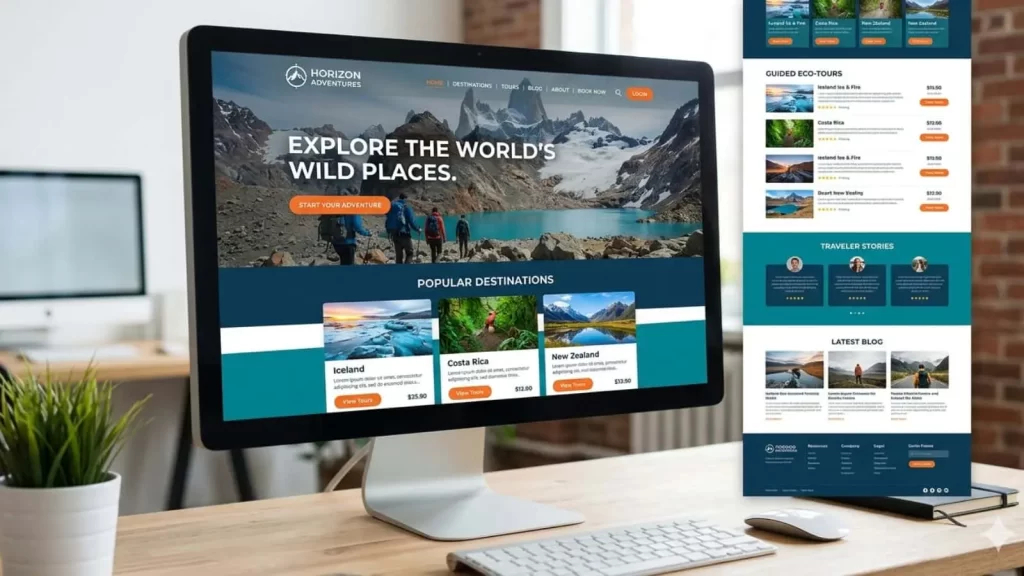
A business website is no longer just a digital brochure. It is often the first sales conversation, the first trust signal, and the first place customers decide whether your business feels credible or risky. The problem is that many businesses still treat website design as decoration instead of infrastructure. The best website design for business growth is not the one with the most animations or the trendiest layout. It is the one that reduces friction, builds trust quickly, guides customer decisions clearly, and consistently turns visitors into leads, bookings, enquiries, or sales.
Summary
The best website design for business growth combines strong user experience, conversion-focused structure, mobile responsiveness, SEO foundations, trust signals, and clear messaging. High-performing websites are built around customer decisions and business outcomes, not aesthetics alone.
Key Takeaways
- Growth-focused website design is about conversions and trust, not just visuals.
- Strong websites reduce decision friction and guide users toward action.
- Mobile responsiveness, fast loading speed, and SEO structure directly affect business growth.
- Clear messaging and strategic calls-to-action improve lead generation.
- Businesses should evaluate websites based on outcomes, not appearance alone.
Why Website Design for Business Growth Matters
Most businesses lose customers before the conversation even starts. A visitor lands on the website, feels confused, overwhelmed, uncertain, or unconvinced, then leaves. That decision often happens within seconds. According to Nielsen Norman Group, users form rapid judgments about website credibility based on visual appearance and usability. Similarly, research on conversion-focused design consistently shows that usability and trust strongly affect customer behavior. (Americaneagle.com)
A website influences:
- trust,
- perceived professionalism,
- search visibility,
- customer confidence,
- conversion rates,
- and long-term brand positioning.
This is where many businesses misunderstand website design. They focus on:
- animations,
- trendy layouts,
- colors,
- or visual effects,
while ignoring:
- customer psychology,
- clarity,
- conversion flow,
- and decision-making systems.
A growth-focused website is designed around one core principle: Reduce friction and help users make decisions faster. If users cannot quickly understand:
- what the business does,
- who it helps,
- why they should trust it,
- and what to do next,
the website becomes a liability instead of a growth asset.
What Makes Website Design For Business Growth Actually Matter?
Most websites fail because they are designed like online brochures instead of business systems. A growth-focused website is built to:
- guide decisions,
- reduce hesitation,
- build trust,
- and generate measurable outcomes.
That changes how design decisions are made completely.
| Standard Website | Growth-Focused Website |
|---|---|
| Focuses on appearance first | Focuses on customer decisions first |
| Talks mainly about the business | Talks about customer outcomes |
| Generic “Contact Us” CTA | Structured lead-generation flow |
| Built once and ignored | Continuously optimized |
| Looks modern | Generates measurable business results |
| Prioritizes visuals | Prioritizes conversions and trust |
| Treats traffic as success | Treats conversions as success |
This distinction matters because traffic alone does not grow businesses. A website becomes valuable when it:
- increases enquiries,
- improves lead quality,
- supports sales,
- strengthens trust,
- and reduces customer acquisition friction.
According to conversion optimization research, user experience improvements significantly influence whether visitors take meaningful actions online. (Americaneagle.com) That means website design is no longer just creative work. It is operational infrastructure.
Understanding Business Goals Before Designing a Website
Before discussing:
- layouts,
- colors,
- fonts,
- or visuals,
businesses must first define what the website is supposed to achieve. Without clear business goals, website decisions become random.
Common Website Goals
| Business Objective | Website Priority |
|---|---|
| Lead generation | Conversion-focused landing pages |
| Ecommerce sales | Fast product discovery and checkout |
| Service enquiries | Clear trust signals and CTAs |
| Brand authority | Strong positioning and case studies |
| Customer support | Easy navigation and support systems |
| Bookings | Streamlined scheduling process |
The best website design for business growth aligns every design decision with business outcomes. For example:
- A law firm website should prioritize credibility and trust.
- A SaaS website should prioritize onboarding and demos.
- An ecommerce website should prioritize checkout simplicity.
- A local business website should prioritize visibility and contact flow.
Good design is strategic alignment. Not decoration.
How Website Design Influences Customer Decisions
Business owners often think website design is mostly visual. In reality, website design shapes:
- trust,
- decision speed,
- perceived credibility,
- and customer confidence.
Users react emotionally before they analyze logically. When visitors encounter:
- cluttered pages,
- confusing navigation,
- weak messaging,
- slow loading,
- or inconsistent branding,
they interpret it as business risk. Research on UX and conversion behavior shows users are significantly more likely to convert when websites appear trustworthy, fast, and easy to use. (Excited)
This explains why:
- testimonials matter,
- speed matters,
- navigation matters,
- and clear messaging matters.
Every visitor is silently asking:
- “Can I trust this business?”
- “Will this solve my problem?”
- “What should I do next?”
- “Is this worth my time?”
The best websites answer those questions immediately.
User Experience and Conversion Optimization
A website can look beautiful and still fail commercially.
This is where user experience (UX) and conversion optimization become critical.
UX focuses on making interactions:
- intuitive,
- predictable,
- and frictionless.
Conversion optimization focuses on helping users complete actions. Together, they determine whether traffic becomes revenue.
Common UX Problems That Hurt Growth
Many business websites create friction through:
- overloaded menus,
- poor mobile experiences,
- slow-loading pages,
- confusing navigation,
- weak calls-to-action,
- and excessive information.
Users rarely announce confusion. They simply leave. According to UX and conversion research, intuitive navigation and clear visual hierarchy directly affect engagement and conversions. (CodeVix)
Weak vs Optimized Homepage Structure
| Website Element | Weak Version | Growth-Focused Version |
|---|---|---|
| Headline | “Welcome to Our Website” | “Helping Businesses Generate More Qualified Leads Online” |
| CTA | “Learn More” | “Book a Free Strategy Session” |
| Homepage Copy | Company-focused | Customer outcome-focused |
| Navigation | Too many menu items | Clear and simplified structure |
| Mobile Experience | Difficult navigation | Mobile-first optimization |
| Testimonials | Hidden or missing | Positioned near decision points |
| Contact Flow | Hard to find | Highly visible and frictionless |
| Images | Generic stock photos | Authentic team or client visuals |
Most businesses do not have a traffic problem. They have:
- a clarity problem,
- a trust problem,
- or a conversion problem.
Visual Design and Branding That Build Trust
Visual design affects perception before users read anything. Typography, spacing, color systems, imagery, and layout all communicate trust signals instantly.
What Strong Visual Design Includes
Clear Visual Hierarchy
Users should instantly know:
- what matters,
- where to focus,
- and what action to take next.
Strong hierarchy uses:
- spacing,
- typography,
- contrast,
- and content structure strategically.
Research consistently shows that visual hierarchy improves usability and comprehension. (CodeVix)
Consistent Branding
Consistency builds familiarity. Familiarity builds trust. Strong branding systems include:
- consistent typography,
- colors,
- image styles,
- messaging tone,
- and button patterns.
When branding feels inconsistent, businesses appear less reliable.
Readability and Scannability
People scan websites before reading deeply. The best websites use:
- short paragraphs,
- readable fonts,
- strong contrast,
- and scannable layouts.
Good design reduces mental effort.
Mobile Responsiveness and Accessibility
A website that performs poorly on mobile devices is already losing business. Mobile traffic dominates modern browsing behavior, and Google uses mobile-first indexing. (CodeVix)
Why Mobile-First Design Matters
Responsive websites adapt smoothly across:
- smartphones,
- tablets,
- desktops,
- and varying screen sizes.
This directly affects:
- usability,
- SEO,
- engagement,
- and conversions.
Common mobile problems include:
- tiny text,
- broken layouts,
- slow pages,
- unusable forms,
- and difficult navigation.
Users will not fight through poor mobile experiences. They leave.
Why successful mobile first design why its no longer optional
Accessibility Is Part of Good Business Design
Accessibility ensures websites are usable for everyone, including users with disabilities. This includes:
- readable contrast,
- screen reader compatibility,
- keyboard navigation,
- descriptive alt text,
- and accessible forms.
The W3C Web Accessibility Initiative provides international accessibility standards used globally. Accessibility improves usability for all users, not just specific groups.
Technical Performance and SEO Foundations
Visual design alone cannot save a technically weak website. Businesses often ignore:
- speed,
- SEO structure,
- hosting quality,
- and security.
That becomes expensive later.
Website Speed Directly Affects Conversions
Slow websites reduce:
- engagement,
- trust,
- and conversion rates.
Research consistently shows users abandon slow-loading websites quickly. (CodeVix) Common speed issues include:
- oversized images,
- excessive plugins,
- poor hosting,
- and bloated code.
Fast websites create smoother experiences and stronger trust signals.
SEO-Friendly Website Structure
SEO should not be added later. It should exist inside the website structure from the beginning. Strong SEO foundations include:
- optimized headings,
- internal linking,
- crawlable architecture,
- metadata optimization,
- schema markup,
- and mobile responsiveness.
The best website design for business growth supports discoverability continuously.
Security and Reliability
Users expect websites to feel secure immediately. Key security foundations include:
- HTTPS encryption,
- regular updates,
- malware protection,
- backups,
- and reliable hosting.
Weak security damages trust instantly.
Common Website Design Mistakes That Hurt Business Growth
Many businesses unknowingly damage performance through avoidable design decisions.
Prioritizing Trends Over Clarity
Fancy visuals often increase confusion instead of engagement.
Research on visual intensity and conversion behavior shows excessive interface intensity can reduce user experience and create negative reactions. (arXiv)
Clarity usually outperforms complexity.
Find out the best global website designs and find out how to build for international audiences
Using Weak Calls-to-Action
Generic CTAs create low motivation.
Weak:
- “Submit”
- “Learn More”
- “Click Here”
Stronger:
- “Book a Free Website Strategy Session”
- “Get a Website Performance Audit”
- “See How Your Website Is Performing”
Good CTAs explain value clearly.
Find the best complete guide for small businesses that actually converts
Overloading Pages With Information
Too much information creates cognitive overload.
Users should not need to “figure out” the business.
Good websites simplify decisions.
Ignoring Trust Signals
Trust indicators include:
- reviews,
- testimonials,
- case studies,
- certifications,
- client logos,
- and guarantees.
Without trust signals, hesitation increases.
2-Minute Website Audit for Business Owners
If your website fails most of these checks, it may be limiting business growth.
Messaging
- Can visitors understand what you do within 5 seconds?
- Is your value proposition clear?
- Does the homepage focus on customer outcomes?
Trust
- Are testimonials visible?
- Are case studies included?
- Does the website look current and professional?
User Experience
- Is navigation simple?
- Is the mobile experience smooth?
- Do pages load quickly?
Conversion
- Are calls-to-action visible?
- Is contacting the business easy?
- Are forms short and frictionless?
SEO and Performance
- Is the site optimized properly?
- Is the website secure?
- Does the structure support search visibility?
If several answers are “no,” the issue may not be traffic.
The issue may be website friction.
How to Choose a Website Design Agency That Understands Growth
Many agencies sell visuals.
Very few understand conversion systems.
That difference matters because attractive websites can still fail commercially.
Red Flags to Watch For
They Focus Only on Design
If discussions revolve mostly around:
- trends,
- animations,
- colors,
- or templates,
without discussing:
- lead generation,
- customer journeys,
- conversions,
- analytics,
- or SEO,
the project is likely design-led instead of growth-led.
They Cannot Explain Strategy Clearly
Strong agencies explain:
- why pages are structured a certain way,
- how conversions happen,
- where friction exists,
- and how the website supports business objectives.
Weak agencies speak vaguely about “modern design.”
They Ignore Post-Launch Optimization
High-performing websites evolve continuously.
Strong agencies discuss:
- analytics,
- testing,
- optimization,
- and ongoing performance improvements.
Websites should improve over time.
Not remain static.
Measuring Whether Your Website Is Actually Working
Many businesses measure traffic instead of outcomes.
Traffic alone means very little.
A smaller number of qualified visitors often outperforms large amounts of irrelevant traffic.
Metrics That Actually Matter
| Metric | Why It Matters |
|---|---|
| Conversion Rate | Shows how many visitors become leads or customers |
| Bounce Rate | Indicates friction or poor relevance |
| Lead Quality | Measures whether the right customers are converting |
| Time on Site | Reflects engagement and relevance |
| Search Visibility | Supports long-term discoverability |
| Enquiry Volume | Direct indicator of business impact |
Research on conversion-focused optimization shows that improving conversion systems often creates stronger revenue gains than simply increasing clicks. (arXiv)
The Real Goal of Website Design
The goal of website design is not simply making websites look impressive.
The real goal is reducing hesitation.
Every strong business website does four things well:
- Builds trust quickly
- Explains value clearly
- Reduces decision friction
- Guides users toward action
That is why conversion-focused websites outperform visually impressive websites with weak structure.
Research consistently shows that user-centered design improves engagement, trust, and measurable business outcomes. (Altitude Design)
Growth happens when websites help users make decisions faster and with more confidence.
That is the actual system.
Conclusion
The best website design for business growth is not about trends, flashy visuals, or expensive layouts.
It is about building a system that:
- reduces confusion,
- strengthens trust,
- improves conversions,
- and supports measurable business outcomes.
Strong websites combine:
- strategic messaging,
- conversion-focused UX,
- responsive design,
- SEO foundations,
- technical performance,
- and continuous optimization.
Businesses that treat websites as growth infrastructure usually outperform businesses that treat websites as decoration.
If your website is not consistently generating trust, enquiries, or conversions, the problem may not be traffic.
It may be friction.
And friction is usually a design and strategy problem before it becomes a marketing problem.
Stop losing customers to an outdated website.
Upgrade to a design that builds trust and drives action. Let’s design a site that works for your business.